AI models inherit every vulnerability in their training pipelines.
Traditional application security tools scan code syntax while remaining blind to corrupted weights.
In October 2024, the National Institute of Standards and Technology published NIST SP 800-218A to address this blind spot.
The standard creates the first authoritative community profile extending the Secure Software Development Framework to generative artificial intelligence.
Enterprise procurement teams and federal regulators are turning this guidance into mandatory operational baselines.
Securing foundation models shifts the security boundary from source code repositories to dataset provenance and weight signing.
Why Traditional AppSec Fails Neural Networks
Conventional software development produces deterministic binaries compiled from inspectable source code.
When a developer introduces a logic flaw or imports an insecure dependency, static analysis tools and software bill of materials scanners locate the exact line or package.
 Foundation models operate under fundamentally different execution principles. Their runtime behaviors emerge from billions of numerical weights calibrated during massive distributed optimization passes.
A poisoned dataset does not trigger a compilation error, throw a syntax exception, or break a unit test. The model silently absorbs toxic patterns, backdoors, or extraction vulnerabilities directly into its latent parameter space.
Standard vulnerability scanners cannot parse the semantic implications of numerical tensors. Security teams cannot treat model weights as ordinary binary blobs without understanding their lineage.
Without verifiable data provenance, downstream applications inherit hidden risks that persist through subsequent fine tuning steps. Securing neural pipelines demands an architectural shift toward rigorous supply chain verification.
The Four Pillars of NIST SP 800-218A
The NIST SP 800-218A publication establishes actionable controls organized around four core pillars. These practices adapt the general Secure Software Development Framework to the specific challenges of foundation models.
The first pillar focuses on organizational preparation and governance. Organizations must define clear policies regarding data acquisition, intellectual property verification, and acceptable model usage.
The second pillar requires protecting all software and infrastructure components. This mandate includes isolating training environments, encrypting stored checkpoints, and locking down data ingestion pipelines.
The third pillar governs producing well secured models. Teams must validate dataset hygiene, sanitize training text, and perform systematic red teaming before releasing weights to internal or external consumers.
The fourth pillar mandates continuous vulnerability response and monitoring. Production systems require active instrumentation to detect behavioral drift, unauthorized prompt extraction, and emergent adversarial behaviors.
Managing Data Lineage and Provenance
Data is the source code of generative artificial intelligence. Any compromise in the data pipeline directly corrupts the final system behavior.
NIST SP 800-218A places data governance at the center of model security. Engineering teams must document the exact origins, licensing parameters, and collection methodologies for all training corpora.
Organizations must compute and record cryptographic hashes for raw data files before ingestion. Verifying checksums at every transformation stage prevents unauthorized modification during preprocessing.
Data sanitization requires automated filtering to remove embedded secrets, personal information, and malicious injection payloads. Allowing unfiltered web scrapes into training sets creates direct paths for data poisoning attacks.
Modern system design architecture must incorporate immutable storage buckets and rigorous audit logs for every dataset revision. Treating data as auditable code represents the primary defense against training set tampering.
Securing Training Infrastructure and Model Artifacts
Training foundation models requires distributed compute clusters, high performance interconnects, and terabytes of intermediate checkpoint storage.
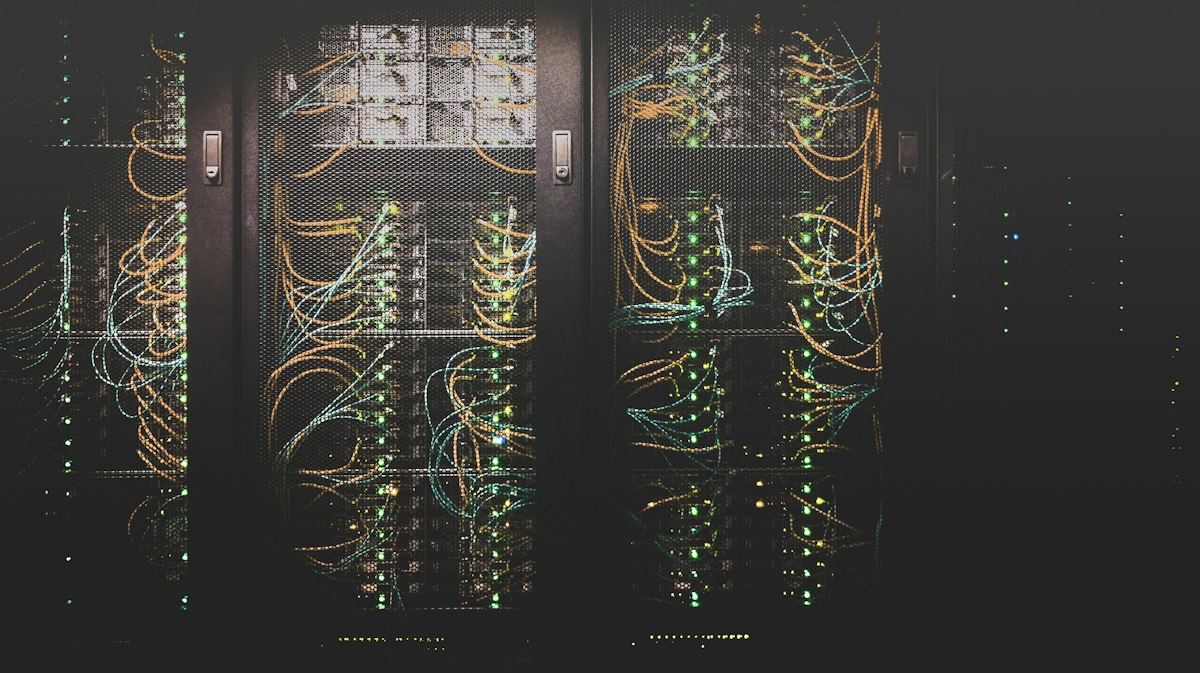 Adversaries who gain access to training infrastructure can modify weights, inject covert triggers, or extract proprietary training samples. Securing this environment requires strict network segmentation and hardware identity controls.
Applying comprehensive cloud security baselines prevents unauthorized access to GPU clusters and storage volumes. Administrative credentials for orchestration platforms must require hardware token authentication and automated rotation.
Every completed model checkpoint must receive a cryptographic signature before entering production registries. Inference servers should refuse to load unsigned or unverified model artifacts.
Teams should also maintain a machine learning bill of materials detailing base model ancestry, tokenizer definitions, fine tuning datasets, and training hyperparameters. This documentation ensures rapid impact assessment when an upstream base model suffers a vulnerability disclosure.
Runtime Interface Defense and Telemetry
Static supply chain integrity cannot protect against dynamic runtime exploits. Deployed model endpoints face continuous automated attacks from adversarial prompts and extraction queries.
Securing inference endpoints requires enforcing strict API security standards. Gateways must apply token quotas, rate limiting, and behavioral anomaly detection to prevent automated scraping of proprietary model logic.
Input guardrails must evaluate incoming user requests for prompt injection patterns, systemic jailbreaks, and sensitive data requests. Output filters must inspect generated responses to block accidental data leakage or toxic completions.
Engineering teams must implement continuous observability telemetry across all inference paths. Logging token distributions, latency metrics, and safety classifier triggers enables rapid detection of coordinated evasion attacks.
Organizations should conduct continuous adversarial red teaming exercises against deployed systems. Testing model resilience against emerging attack vectors identifies safety weaknesses before malicious actors exploit them.
Three Steps to Implement NIST SP 800-218A Today
- Establish cryptographic provenance for all training datasets and checkpoints. Compute SHA256 checksums for every raw dataset partition, sign model artifacts with private keys, and verify signatures at inference startup.
- Isolate training infrastructure with strict identity boundaries. Enforce least privilege access across orchestration nodes, restrict network egress from training clusters, and log all administrative actions to immutable audit trails.
- Deploy multi layered runtime guardrails and observability telemetry. Implement dedicated gateway filtering to intercept adversarial prompts, sanitize model completions, and monitor query patterns for automated extraction attempts.
The Evolution of Artificial Intelligence Assurance
Security teams previously treated commercial models as opaque third party black boxes that could not be verified.
NIST SP 800-218A replaces blind trust with measurable engineering controls across data, training pipelines, and production interfaces.
Which architectural control in NIST SP 800-218A presents the largest technical hurdle for your team to operationalize in production?