Artificial intelligence assistants invent nonexistent software packages that developers install.
Engineers routinely copy generated code into production projects without checking whether the referenced library exists on public package registries.
Security researcher Bar Lanyado at Vulcan Cyber demonstrated that major language models consistently invent identical fictional library names when prompted for programming solutions, a phenomenon known as AI package hallucination.
Subsequent findings from supply chain researchers at Sonatype revealed that threat actors actively query commercial models, collect these recurring imaginary names, and claim them on public repositories.
When an unsuspecting developer runs a package manager command to satisfy a hallucinated import, the system downloads the adversary registered package without raising an error.
Attackers do not need to discover zero day flaws in existing libraries when language models manufacture empty namespace targets on demand.
The Probability Mechanics Behind Phantom Namespaces
Generative models do not look up real world package registries when writing code.
Instead, the neural network calculates token probabilities to predict the most semantically convincing library name for a specific technical task.
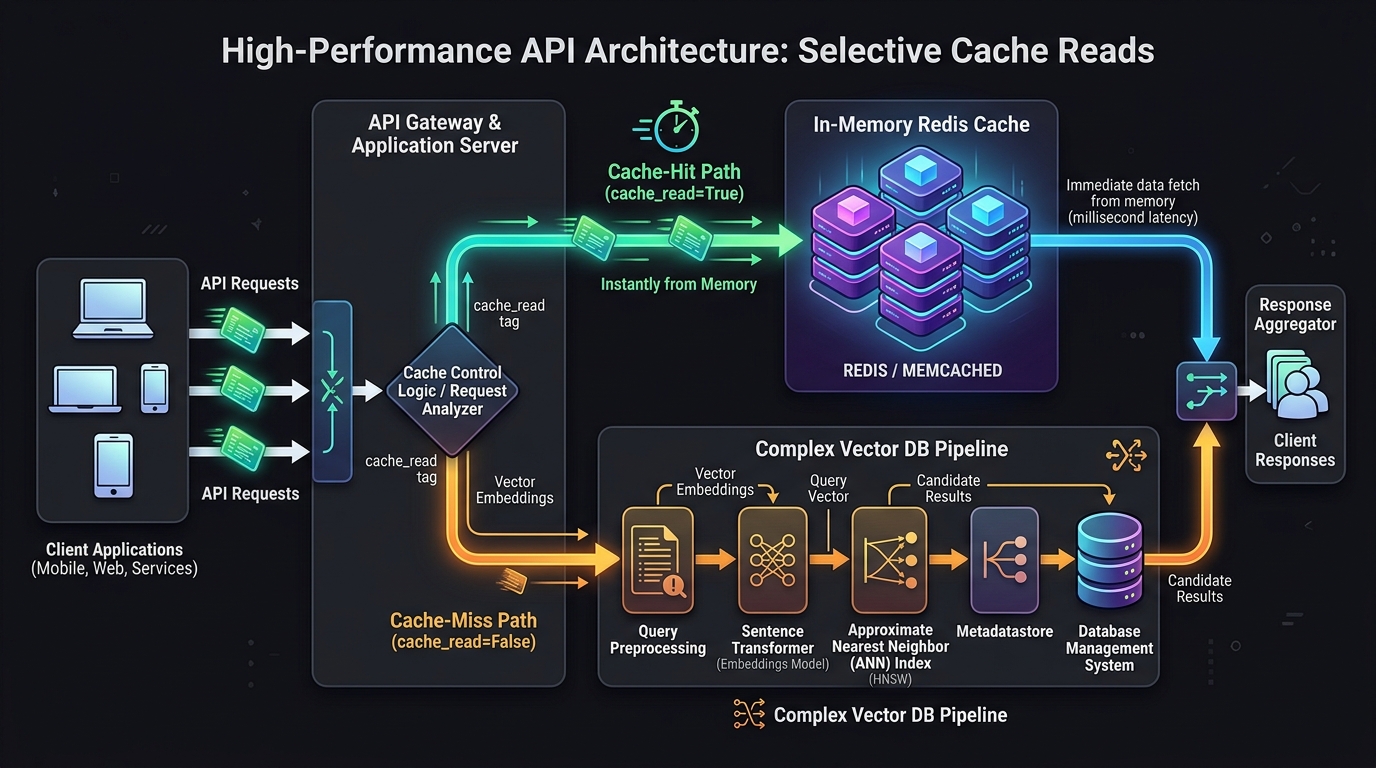
When thousands of engineers ask a model how to parse specialized binary formats or interact with private cloud endpoints, the model repeatedly suggests the same invented package name.
Because token prediction is deterministic across identical prompt embeddings, these phantom names become reproducible across thousands of disparate developer machines.
An attacker needs only to automate prompt generation, harvest the hallucinated package names, and register them across repositories like PyPI and npm.
The registered package can contain malicious setup routines that execute arbitrary code immediately during package resolution, before the application code even executes.
Software developers who master Python programming often assume their local virtual environments isolate execution, yet install hooks run with full developer permissions.
This dynamic creates a silent bridge between probabilistic text generation and arbitrary code execution on private workstations.
Attackers automate the entire lifecycle by scraping documentation queries, predicting candidate packages, and squatting the names before legitimate developers create them.
Because namespace registration is free and immediate on major public repositories, an adversary can maintain thousands of dormant phantom packages with negligible overhead.
Why AI Package Hallucination Bypasses Traditional Scanners
Traditional software composition analysis platforms rely on databases of known vulnerabilities and historical Common Vulnerabilities and Exposures.
A newly registered phantom package has no recorded vulnerability disclosures or historical defect reports.
Because the package name is fresh and contains clean metadata, automated dependency auditing tools assign it a clean score during local scans.
Organizations that resolved vulnerabilities where developer servers leaked credentials through build scripts remain vulnerable to malicious libraries that appear brand new.
The situation becomes more precarious as teams adopt autonomous agent systems that generate, test, and install dependencies without human intervention.
When an autonomous agent receives an import error during continuous integration tests, its fallback routine often executes an automatic installation command against the public registry.
Preventing these cascading failures requires disciplined defenses and structured validation in AI prompt engineering workflows.
Without explicit guardrails, autonomous coding agents turn phantom library generation into immediate, unreviewed remote dependencies.
Static code analysis tools similarly evaluate code syntax and known library signatures, remaining completely blind to the fact that an imported library is an attacker squat.
By the time a security audit takes place, the malicious setup routine has already exfiltrated local environment secrets to remote infrastructure.
The Lifecycle of an Attack on Fictional Packages
The attack begins when an engineer asks an assistant to implement a niche integration, such as authenticating with an obscure enterprise service.
The assistant outputs clean code alongside a pip or npm install instruction referencing a plausible package name that does not actually exist.
If the engineer runs the install command before anyone claims the name, the terminal simply returns a four hundred and four package not found error.
However, when a threat actor has already pre registered that exact package name, the package manager successfully downloads and installs the adversary code.
The payload executes immediately through package install hooks like setup python scripts or npm postinstall directives.
These install hooks run with the full permissions of the user running the terminal, allowing the script to inspect local environment files and private directories.
The script silently exfiltrates cloud credentials, personal access tokens, and SSH keys to an external webhook endpoint before exiting cleanly.
Because the installation command reports success, the developer proceeds with implementation, completely unaware of the credential theft.
Three Defenses Against Hallucinated Dependency Poisoning
Engineering teams must treat all model generated code as untrusted input before adding dependencies to project configuration files.
1. Enforce private package proxies with strict quarantine periods. Configure internal package mirrors to hold newly published upstream libraries in quarantine for seven days so maintainers can detect and remove malicious registrations before local builds ingest them.
2. Validate package provenance against official repository policies. Require every added dependency to verify its publisher identity, source repository linkage, and release history against published PyPI security standards before installation.
3. Isolate autonomous development tools in sandboxed environments. Restrict code assistants and agent tools from executing unverified terminal commands, confining test runs inside ephemeral container boundaries to prevent secret exfiltration.
The Evolution of Supply Chain Verification
Supply chain security historically focused on detecting compromised maintainer accounts and misspelled package names on public registries.
Today, attackers simply occupy the empty namespace territories that neural networks suggest to millions of engineers every day according to Sonatype supply chain findings.
Security teams can no longer trust a package merely because a trusted coding assistant wrote its name into an import statement.
Maintaining resilient architectures demands testing security posture against OWASP application security benchmarks and establishing rigorous dependency boundaries.
Organizations must educate software engineers to question every unfamiliar package recommendation regardless of how confident the code assistant sounds.
The defensive perimeter has shifted from the public package registry index directly to the developer prompt input.
How does your engineering organization verify that an artificial intelligence recommended dependency exists as legitimate open source software before running an install command?